By Michael Woyton
“Due process” must be important because it’s in the Constitution in the fifth and 14th amendments.
It, of course, prevents the government from depriving a person of life, liberty or property by having to follow the law.
There is more and more evidence that the current administration of Mad King-wannabe isn’t so interested in “due process” for anyone except himself.
Subscribe to On Second Thought for free:
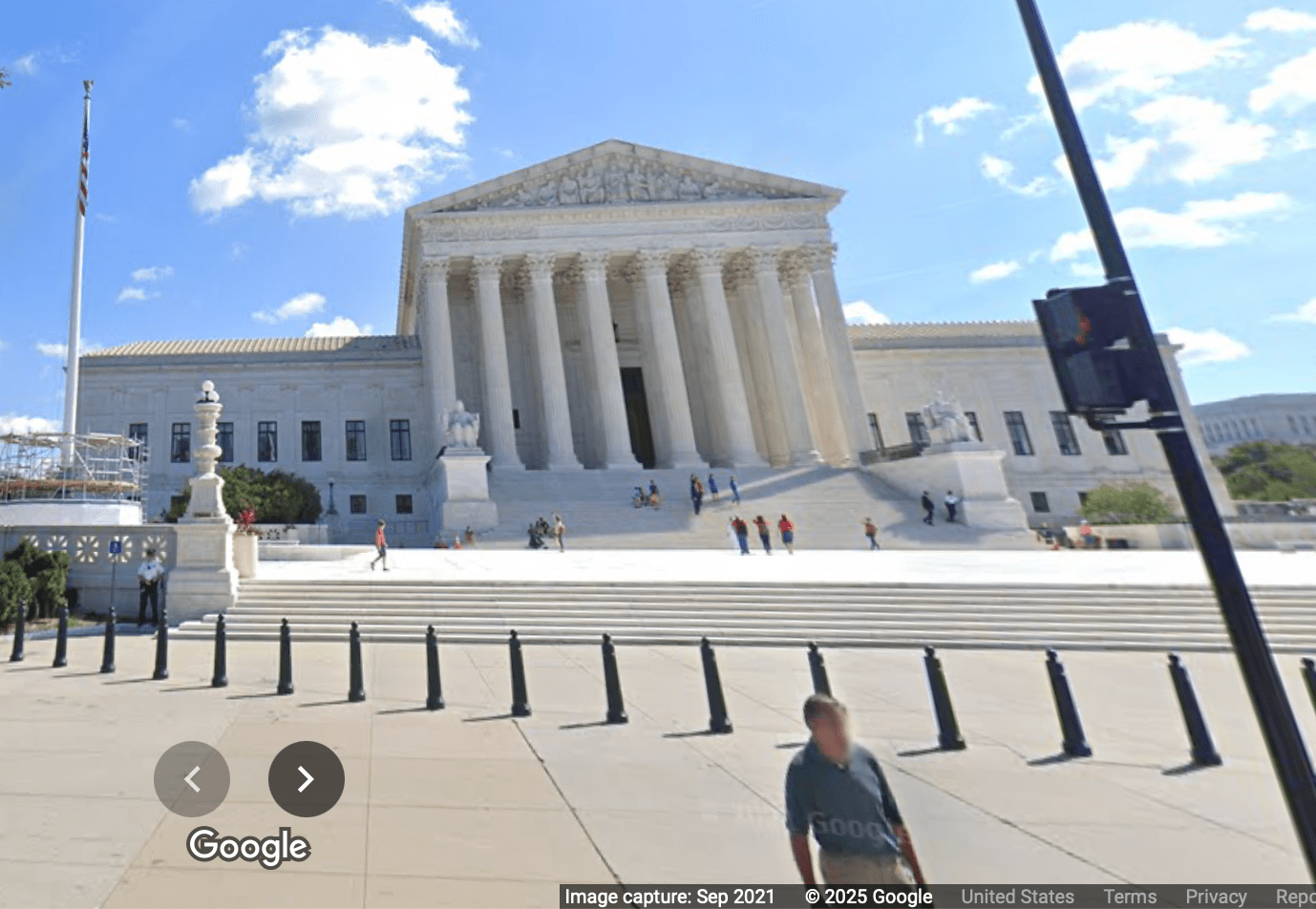
We are awaiting a decision from the Supremes as to whether or not any person regardless of status can be stopped on the street by plainclothes “law enforcement” and taken away to a foreign country never to be heard from again.
The Supreme Court ruled Monday that immigration officials can use the Alien Enemies Act of 1798 to quickly depart people the government believes are gang members, according to CNN.
However, the administration wasn’t given free rein in the deportations, saying that “going forward, people who are departed should receive notice they are subject to the act and an opportunity to have their removal reviewed by the federal court where they are being detained,” CNN reported.
The three liberal justices on the court dissented, with Justice Amy Coney Barrett, joining in the dissent on a couple of items.
In her dissent, Justice Sonia Sotomayor said that “even the majority today agrees and the federal government now admits, that individuals subject to removal under the Alien Enemies Act are entitled to judicial notice and review before they can be removed,” NPR reported.
Sotomayor said that should have been the end of the matter, but went on to say that the government has continued to subvert the judicial process throughout and should not be rewarded for its efforts to erode the rule of law.
The court’s ruling seems to be based on the belief — at least for the majority of the justices — that the government will operate in good faith.
That is something that they have up to now chosen not to do.
Immigration officials are more than willing to, without warning, sweep in and take someone off the streets, accuse them of breaking the law and disappear them. And if the officials make a mistake, well, that’s too bad.
The case in point, which the Supremes will also be deciding, is about returning a Maryland father, Kilmar Abrego Garcia, who was deported March 15 because of an “administrative error,” NBC News reported.
Administration officials claimed the man is an MS-13 gang member. His lawyer disputes that and said Abrego Garcia came to this country in 2011 fleeing gun violence and death threats from gang members and has no criminal record.
A United States district judge ordered the man returned by midnight Monday, but the Supreme Court paused that order, pending a review of the case.
Basically, the government said mistakes happen, but there is no way to bring the man back.
Newly installed U.S. Solicitor General John Sauer wrote that the district court “has no juridiction over the Government of El Salvador and thus no authority to order Abrego Garcia’s return to the United States.”
Imagine being surrounded by people who are not wearing law enforcement uniforms, some wearing masks and some not, and then being physically taken while handcuffed to an unmarked car and driven who knows where.
That happened March 25 to Tufts University graduate student Rumeysa Ozturk in the Boston suburb of Somerville. She was then flown to an ICE detention center in Basile, Louisiana, the Associated Press reported.
Ozturk’s situation, and that of Columbia graduate student Mahmoud Khalil who was taken into custody as his wife recorded the incident on her phone, brought back memories for people who have lived in countries that snatch their citizens off the street.
In an opinion piece that appeared in the New York Times Wednesday, M. Gessen wrote, “Those of us who have lived in countries terrorized by a secret police force can’t shake a feeling of dreadful familiarity.”
She spoke with people who remembered arrests that were arbitrary and being afraid every time the doorbell rang.
Gessen said that citizens of a police state “live with a feeling of being constantly watched. They live with a sense of random danger. Anyone — a passer-by, the man behind you in line at the deli, the woman who lives down the hall, your building’s super, your own student, your child’s teacher — can be a plainclothes agent or a self-appointed enforcer.”
She said people then live in growing isolation and with the feeling of low-level dread, “and these are the defining conditions of living in a secret-police states.”
Gessen ends by saying that the U.S. has indeed become a secret-police state. “Trust me, I’ve seen it before,” she wrote.
Now it’s up to the Supreme Court, a body that has shown it seldom cares what is really best for the country, but rather what is best for special interests, including the president of the United States, to determine if we really do still have the rule of law and constitutional due process.
Will the justices decide that even citizens can be disappeared?
Find and follow me on BlueSky through this link.
Lead art: Screen grab from Google Maps
 On Second Thought